Friday, October 24, 2008

Starlings Over Africa: Wisdom in Flight

Starling2


This past week in a sermon I gave Politics, Faith, and Wisdom I spoke of starlings and how they might have things to teach we humans, especially in this time of elections, turmoil, war, economic uncertainty, and the hardship and strife for those caught in the web of life. After the service one man came up to me and said, "one individual starling is just about the most beautiful thing on earth, in a flock though they are pests and of great concern."


I thought how true for our own species as well. In Darfur atrocities continue, a swarm of oppression, anger, hurt, and devastation has descended upon these peoples. African culture and people are immensely wondrous, for they are the holders of our ancient roots. Roots of beauty, and roots that feed upon the suffering of others. People harming people and now the starlings have descended upon them.


362518darfur1_600


         Earth week in late September ((www.earthweek.com/2008/ew080926/ew080926c.html) reports:


"Sudan’s troubled Darfur region has received another blow to its stability — this time


from an invasion of starlings, known locally in Arabic as zarzur. The Sudanese daily


Alray Alaa’m

reports that large flocks of the winged pests have descended upon South


Darfur State, destroying crops and threatening to bring even more acute food shortages


and higher prices. A spokesman for the Sudanese Revolutionary Front said government


neglect had allowed the bird invasion, but stated that his forces would not interfere with


any airplanes dispatched to combat the birds with aerial spraying."


22birds190_5


The starlings tell us of what we are doing not just to each other, but to our earth. Flocks increase in size, some say due in part to climate change. The starlings used to go further south before Roman winters warmed up. Now they overwhelm parts of our urban and rural landscapes throughout the world, as do the human counterparts. Each of us is so beautiful, but in great numbers, what are we to do with ourselves? Is the final answer that we are to be feared as a dark, voracious multitude with violence or despair as the only answer?


Onion_imagearticle1404


I believe that we can find beauty in the darkest hour, in the most complex unnerving paradox. A swirling flock may wreak havoc upon the land, and can also inspire gratitude for the chaotic interconnection in which we dwell. Starling flocks, "murmurations," whisper to us, coaxing out our wisdom, much as they did in ages past when people studied flocks in an art called augury that sought meaning in the patterns of bird flight.


Ew080926c


A flock of European starlings over Africa swirls and moves as one. When a predatory hawk or falcon attacks the group, they scatter only to regroup once again, undulating nearly as one organism so perfect is their flight – no one bird hits another and there is not one bird in control. Instead they each follow simple rules – stay to the center as much as possible, stay 2-3 bird lengths away from the next bird, don’t hit another bird, and get away from the hawk.


Our rules can be simple too. Go into the heart of understanding, to the center of where beauty and joy lay. But don’t stay fixated on that center, there really is no center of truth. It’s constantly moving as more and more different people enter our communities and realm of influence. With every new stranger encountered get as close as possible to the other, but not too close. Don’t hit them and do no harm, but stay engaged with who they are. We do this by listening and paying attention to where the other is. We don’t hole up year round in our homes or our nesting sites, but join another in public. Our greatest hope as humans is to build a public life where we don’t try to get away from uncomfortable conversations that create chaotic energy beyond our control. Instead we stick together, undeniably free and beautiful on our own, and ever more powerful and wise together, and only together. In this way we may avoid the hawk of desire that plagues us, and in turn not ourselves be a plague upon the planet.


May it be so.


Fly free and blessed be.


Rte_img384


Picture Credits:


Individual starling:

http://www.rosssea.info/pix/big/Starling2.jpg


Darfur:

http://image.politicalbase.com/uploads/issue/1000/43/362518darfur1_600.jpg


NY starlings:

http://www.nytimes.com/2007/04/22/magazine/22birds.t.html?_r=1&scp=5&sq=starlings&st=cse&oref=slogin


Overpopulation:

http://image.politicalbase.com/uploads/issue/1000/43/362518darfur1_600.jpg


African Starlings -

http://www.earthweek.com/2008/ew080926/ew080926c.html


Starling Tree:

http://www.foxybiddy.com/rte_img384.jpg


Wednesday, October 8, 2008

Nature Has Rights: La Naturaleza Tiene Derechos


907846984_ec8b0702ba_5 Out beyond ideas of wrongdoing
and rightdoing there is a field.
I'll meet you there.
When the soul lies down in that grass
the world is too full to talk about.


- Rumi (Sufi Poet)


Ecuadorsunsetb_3 On Sunday September 28th Ecuador passed a new constitution, becoming the first country in the world to grant rights to nature.


In the First Article of this Constitution: La Naturaleza o Pachamama, donde se reproduce y se realiza la vida, tiene derecho a existir, perdurar, manetener, y regenera sus ciclos vitales, su estructura, funciones y procesesos evolutivos.


Nature has the right to exist, persist, maintain and regenerate its vital cycles, structure, functions and its processes in evolution.

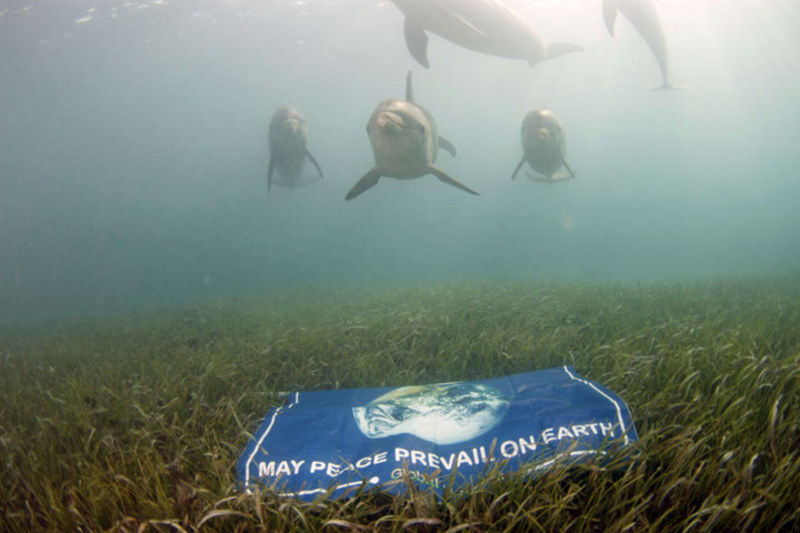
Earthflag1514web_3 I nearly wept while reading this vision, put forth by a people, proclaiming that they are one community of mixed species, indivisible, with liberty and justice for all. How glorious it might be if in this country that pledges allegiance to a flag, instead we raised our hands to the skies, covenanting with all of life as we seek freedom for all beings. When ever I am present and the people among me recite the Pledge of Allegiance or sing the national anthem, I do look to the skies and to the oceans, over soccer fields, over head in courtrooms, and into the depths of the seas out of which we emerged, swearing before all of life, I belong, you belong, all gods’ critters belong!


I thank the people of Ecuador for their vision, for it seems as if my soul may lie down at last in peace, beyond words, beyond the despair of our species’ fumbling and bumbling, and speak no more, or at least for awhile while I rest in the beauty of wild things.


The Peace of Wild Things

78983755_e1livae0__mg_6216cap1_4 When despair for the world grows in me
and I wake in the night at the least sound
in fear of what my life and my children's lives may be,
I go and lie down where the wood drake
rests in his beauty on the water, and the great heron feeds.
I come into the peace of wild things
who do not tax their lives with forethought
Milky_way_5 of grief. I come into the presence of still water.
And I feel above me the day-blind stars
waiting with their light. For a time
I rest in the grace of the world, and am free.

— Wendell Berry


Picture Credits:

http://farm2.static.flickr.com/1261/907846984_ec8b0702ba.jpg?v=0


http://www.piedrablanca.org/Images/ecuador-sunset-b.JPG


http://www.speakdolphin.com/images/archive/dolphingames/EarthFlag-1514-web.jpg


http://k43.pbase.com/o6/85/582185/1/78983755.E1liVAe0._MG_6216cap1.jpg


http://www.nies.ch/sky/stars/Milky_Way.jpg


Sunday, September 28, 2008

A Beauty That Never Dies

                                                  They who bind to themselves a joy
                                                  Do the winged life destroy
                                                  They who kiss the joy as it flies
                                                   Live in eternity’s sunrise
                                                          (adapted from William Blake)


_i8a9064

One in eight bird species faces extinction, warns Birdlife International in a new report and website released on September 22, 2008.  (State of the World’s Birds, birdlife.org/sowb). This report found biodiversity "continues to get worse, and that, if anything, this deterioration is accelerating, not slowing."  Threatened with extinction include 82 percent of albatross species, 60 percent of cranes, 27 percent of parrots, 23 percent of pheasants, and 20 percent of pigeons listed.  In the 20 years since 1988 and 2008, 225 additional bird species have been listed in a higher category of threat.


Monkeypigphtsht1309_468x325

It does indeed seem like we are binding to ourselves a joy, and thus destroying the bird life we treasure.  In turn we cage ourselves into a world with diminishing beauty.  Ecotherapist Howard Clinebell writes, “There is a general sadness and desperation that undercuts our lives as we witness the steady decline of biodiversity at our own hands, and if we wish happiness we must address the ages old injury our culture and beings have suffered.” 


Carolinaparakeets I look into the future and feel the weight bearing down on me of the increasing barren landscapes once so luxurious around my subtropical home.  It seems I have a choice though.  Do I bend into the ground and bury what beauty and joy is in me or do I dance under any and every winged wonder that flies over, no matter its alarming conservation status?  Weeping comes naturally enough, but it is not enough.  For I know that no matter what the coming years bring, beauty once was, and even its memory keeps beauty before and around me, for it is in me.  In you.  In our species, though we are throwing away the greatest gifts in the world.  The gift cannot be extinguished, though the way is dark.  Somewhere in the deep reaches of our minds still flies the Carolina Parakeet screeching in the trees that exist here only by our species’ permission.  When shall we give ourselves the permission to fly free, to live with abundance.  What shall we do to liberate ourselves as we liberate the birds from extinction? 


For me the answer lies partly in this poem by Wendell Berry in his most recent book on poems, Given


Ytwa7904415 The yellow-throated warbler, the highest remotest voice of this place, sings in the tops of the tallest sycamores, but one day he came twice to the railing of my porch where I sat at work above the river.  He was too close to see with binoculars.  Only the naked eye could take him in, a bird more beautiful that every picture of himself, more beautiful than himself killed and preserved by the most skilled taxidermist, more beautiful than any human mind, so small and inexact, could hope ever to remember.  My mind became beautiful by the sight of him. He had the beauty only of himself alive in the only moment of his life.  He had upon him like a light the whole beauty of the living world that never dies.


I pray that we may not be left alone with only memories.


Thursday, September 18, 2008

FireBird

They who bind to themselves a joy


Do the winged life destroy


They who kiss the joy as it flies


Live in eternity’s sunrise


- William Blake (adapted)


Phoenix20and20moon_2

Once upon a time there was a FireBird known far and wide in many cultures. Often named Phoenix, the bird lived on dew, hurting none during her long life span. Year after year as she flew all over the earth she witnessed the toils and troubles of humans, and became increasingly sad. Eventually, the burden of what she saw and knew tired her, and her feathers became dull. Her time on the earth was ending. Though she desired to live, she knew she must say goodbye to the earth and the sun so that new life could come from her. Using the last of her strength, she gathered twigs from ancient Redwood trees and cones from even older Bristlecone pines that were young when she had been just a chick. She then added leaves from her favorite tree, the fragrant Sassafras, until she had a soft mound upon which to lie. Before settling into a deep sleep, she looked out upon the painful beauty around her one last time before she closed her eyes. The human peoples gathered round her, confused and afraid because Phoenix’s brother, Thunderbird, began to rumble. The despair of one so beautiful angered him, and his rage lit the sky with lightening. One bolt struck her tinder-ready bed, and she was consumed in flames. The ashes had barely cooled before a bright rainbow head poked out, and the beings of the land cheered to see their prophet, their witness, and their winged hope alive once again. Beholding the death and reemergence of the FireBird, the people felt that they too had come through the fire of desire, and felt as if their souls had been burned. Even the fledgling FireBird knew better. The humans had not stepped but one toe into the fire. They did not yet know what it meant to give of one’s self so hope could be born.


Imagescaaq5ktv

Thus the cycle or death and rebirth of the FireBird repeated again and again. The people not only continued, but also increased their devastation of one another and their brother and sister beings. Each generation of the Phoenix lived shorter and shorter life spans, because the Great Bird could only carry the burden of so much suffering and loss in one life-time. One day it came to pass that so greatly had the climate changed that the Phoenix no longer had to build her own funeral pyre or Thunderbird to light it. She simply burned while she flew through the gray skies full of the ash of the burning lands below and of the bones of others whose flesh and habitats were consumed by human desire. In this not so distant time, the ashes of life constantly fell and never cooled, and there never was seen another Phoenix that could love, care, and hold beauty and tragedy together.


Image0006

This story speaks of common human experience and directly to many hearts whose work with birds, ecology, and conservation have left them with confusion and despair. I count myself as one among those. My first trip to Guatemala witnessed the burning of old growth tropical forest and with it acres of nesting trees. Even after ten years of working in conservation there, the burning continued as field upon field of sugar cane supplanted the food, nesting, and roosting trees of generations of wild parrots. To harvest sugar cane the fields are first fired and the ashes rain down as "nieve negra" (black snow). Now the north forests of Guatemala are aflame, endangering the remaining 200 Scarlet Macaws there. Once this rainbow colored bird flew throughout Guatemala in the tens of thousands and now there is but a remnant, waiting, waiting for new life and hope to emerge.


Image0014

As an avian veterinarian and later as minister, I have been waiting. I’ve worked in avian research, on large scale poultry farms, in the pet bird industry, and on the front line of avian conservation. Time and time again I’ve seen hope go up in flames, ever expecting some new idea, some research, some new religious or ethical understanding, or some collaborative project to arise and illuminate what we might do to save ourselves and the life around us. Each year, the ashes of trees and bird bones fall ever more thickly, as do the tears.


Though it seems we are in darkness, not all is lost, yet. Sparks exists in each of us that if kindled and cared for, may provide enough light to lead us out of the darkness that is our brokeness and our disconnection from the whole of nature. To walk this path, I believe the time has come, must come, for humans to be the FireBirds themselves and carry the firebrands to light a new way. This new way shines in my heart through the story of Tsesuna, a FireBird of the Abenaki tribe of North America.


Ravent

Tsesuna the Raven was the son of Thunderbird and went all around the Earth seeking good. In those days, he was a bird with exceedingly beautiful plumage that shone with the colors of the rainbow. His greatest hope was to find light, for the world and its peoples lived in perpetual dark. One day he came upon the Fire of Life burning brightly in a great house. This fire he knew would warm the hearts and hearths of humans, and light their way. Singing a sad song that it had come to this, he jumped into the hot fire to secure one brand for the people. In the process all his feathers were burned black and his voice, once melodic, became only a harsh croak. He flew towards the people, who at first ran from the apparition that spoke their worst fears that were also their great truths. "The light of wisdom and the warmth of love comes not from the cloying darkness of perceived separation, and denial of the harm we perpetuate in our lives. It comes from jumping into the Fire of Life and letting the flames burn our egos away. The songs we hear may be sad and the news harsh, but the giving will allow us to spread our wings to hold all that we see, and give light unto others." Tsesuna passed on the fire to the people, who in turn carried it throughout the earth, no longer waiting for light, but singing.


Parrot_macaw_frontpicture

My hope is that this blog inspires you to pick up firebrands where you may and carry their truth back to the people. No doubt you may wish to run and hide. I know I’ve spent most of my life doing the same. Perhaps like me though you have heard the disappearing songs of birds that you can no longer ignore. I hear the birds calling us to jump into the fire so that our ego may be as ashes at our feet as we spread our wings in joy to hold all that we may. This holding is of the "whole dang" world that nurtures our spirits and heals the earth. In this shared healing, we become whole as we act from the deep knowing that the fate of one is the fate of all. Through our actions we affirm a covenant that we can live as one people and as one earth. Then in some not so distant time, I pray, the promise of life will arc over us as rainbow wings, and with the birds we shall fly free.


Credit pictures: Fire Bird:www.scorpiodream.com
Raven: www.westbynorthwest.org/winter00/raven/Raven.jpg
Scarlet Macaw: www.cityparrots.org/media/Parrot_Macaw_frontp...