|
| From My Videos |
At the bottom of each blog entry are some "daily bird meditation" questions I invite you to reflect upon, and answer back to me or to one another in the comment section.
Go Ahead and Have Some Fun
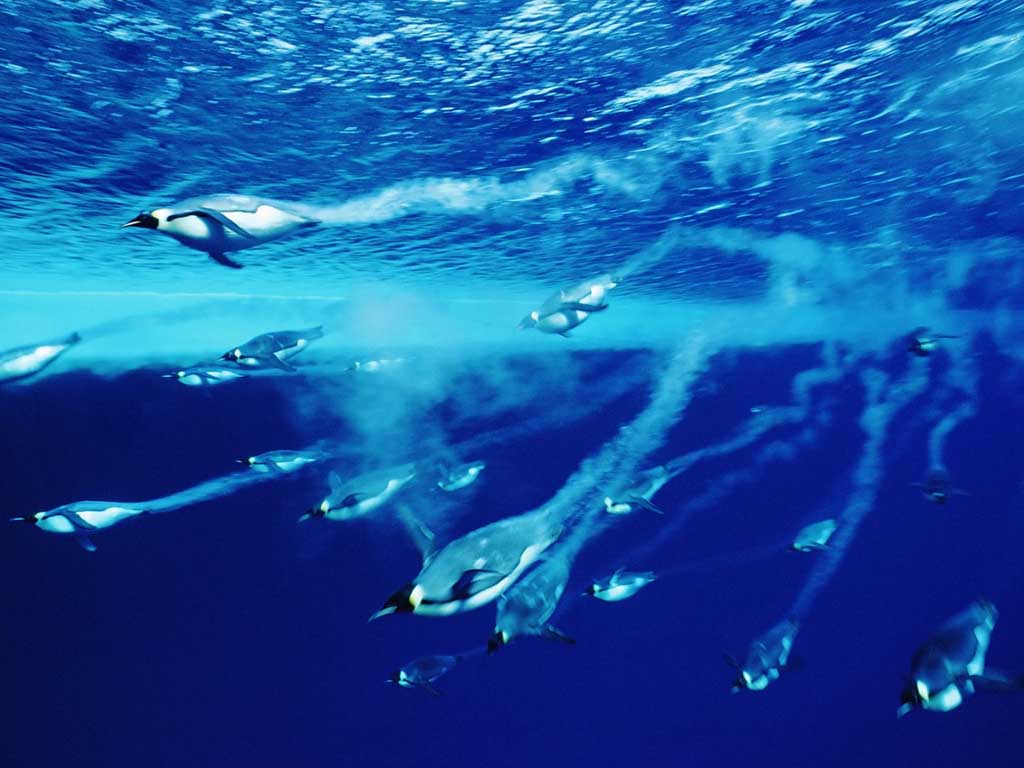
I have loved penguins since I was a small child. They are birds and can swim, and can withstand harsh ocean environments. This combination made them irresistible and heroic to me. I was a swimmer myself who sometimes felt, like the penguins, a little round and off balance on land.
When I was in my early thirties, I lived in Alaska and California. I traveled often up and down the West Coast. One of my favorite stops was the Portland Zoo. A good friend worked there and would let me wander around with her while she fulfilled her obligations. One day she invited me into the Penguin enclosure. There the penguin caretaker introduced me to the fledgling Humboldt penguins and let me feed them their silver, slippery fish. After we fed the young penguins the caretaker picked up one of the young, somewhat fluffy birds and threw her or him into the swirling mass of penguins swimming around the rocks. The shock to me was as great as it must have been to the bird. "Why did you do that?" I asked.
"It’s because the birds need to learn to swim and need to socialize with the flock, and they won’t go into the water unless there is a physiological impulse, which we don’t have here in captivity. So we have to throw them in. Would you like to throw one?" I was appalled and shook my head no. I watched her throw a number of penguins. It didn’t seem to hurt the birds. The urge to throw one began to grow along with the awareness that I might never get another chance. So I stepped up the mound of rock upon which the remaining dubious looking youngsters huddled, choose a likely candidate, did my penguin pitchers wind up, and let her fly. With a satisfying plunk the bird entered the water, came up bobbing, and scrambled onto the rocks next to me. I smiled deeply and broadly, my glee originating in imagining someone picking me up and throwing me in so that I could swim with these mighty ocean goers.
Where do you hold yourself back from having fun? What will you do today that connects you with the world and bring a smile?
Photo Credits: http://www.watfordareaartsforum.com/USERIMAGES/BarryJuvenileHumboldtPengui(1).jpg
http://www.emperor-penguin.com/empswim.jpg
Tears in the Field
My first call as a parish minister was to El Paso, Texas. Neither Meredith nor I had lived in the Southwest. Our first November there the two of us went on a camping loop that swung through Bosque del Apache (Apache Woods), a wildlife management area that offers winter habitat for many species, most notably waterfowl and Sandhill cranes. This stop was an obvious no-brainer for us both. I delight in watching other people discover birds and sharing with them the beauty of winged life. My spouse Meredith delights in watching me watch him watch birds.
As we drove around the refuge I couldn’t believe the diversity and abundance of birds we were seeing. I was ecstatic and Meredith was being a good sport trying to understand how this place was a slice of heaven for me. On a dirt road next to a flooded field we came within 15 meters of a flock of croaking Sandhill Cranes. Not taking his eyes off the birds, Meredith also croaked: "What are those?"
"Well, those would be Sandhill Cranes." Silence followed until he whispered, "And those browner ones – are they a different species?" "No, those are their babies, on their first migration from the winter nesting areas."
More silence. I turned to Meredith. Was he bored? Distracted? He stood transfixed. Tears streamed down his face. Joy had surprised him. He broke into a weeping laugh.
Since that day, he looks for birds on his own without me and always reports back what glory he was gifted to see. And every time I see a crane – the most ancient of all bird species – I remember their power to transform and grow us into happier and more aware beings.
I now live in North Florida and soon the cranes will arrive here, echoing across the skies throughout the winter their haunting quesitons: When have you been surprised by joy? How has your life been changed by unexpected gifts that interconnect you to all of life?
Photo Credits:
http://commons.wikimedia.org/wiki/Image:Grus_canadensis2.jpg
(flock)
http://commons.wikimedia.org/wiki/Image:3Grus_canadensis_flying1.jpg
(Jerry Friedman at Bosque del Apache)
(close up)
|
From My Videos |
This past week in a sermon I gave Politics, Faith, and Wisdom I spoke of starlings and how they might have things to teach we humans, especially in this time of elections, turmoil, war, economic uncertainty, and the hardship and strife for those caught in the web of life. After the service one man came up to me and said, "one individual starling is just about the most beautiful thing on earth, in a flock though they are pests and of great concern."
I thought how true for our own species as well. In Darfur atrocities continue, a swarm of oppression, anger, hurt, and devastation has descended upon these peoples. African culture and people are immensely wondrous, for they are the holders of our ancient roots. Roots of beauty, and roots that feed upon the suffering of others. People harming people and now the starlings have descended upon them.
Earth week in late September ((www.earthweek.com/2008/ew080926/ew080926c.html) reports:
"Sudan’s troubled Darfur region has received another blow to its stability — this time
from an invasion of starlings, known locally in Arabic as zarzur. The Sudanese daily
reports that large flocks of the winged pests have descended upon South
Alray Alaa’m
Darfur State, destroying crops and threatening to bring even more acute food shortages
and higher prices. A spokesman for the Sudanese Revolutionary Front said government
neglect had allowed the bird invasion, but stated that his forces would not interfere with
any airplanes dispatched to combat the birds with aerial spraying."
The starlings tell us of what we are doing not just to each other, but to our earth. Flocks increase in size, some say due in part to climate change. The starlings used to go further south before Roman winters warmed up. Now they overwhelm parts of our urban and rural landscapes throughout the world, as do the human counterparts. Each of us is so beautiful, but in great numbers, what are we to do with ourselves? Is the final answer that we are to be feared as a dark, voracious multitude with violence or despair as the only answer?
I believe that we can find beauty in the darkest hour, in the most complex unnerving paradox. A swirling flock may wreak havoc upon the land, and can also inspire gratitude for the chaotic interconnection in which we dwell. Starling flocks, "murmurations," whisper to us, coaxing out our wisdom, much as they did in ages past when people studied flocks in an art called augury that sought meaning in the patterns of bird flight.
A flock of European starlings over Africa swirls and moves as one. When a predatory hawk or falcon attacks the group, they scatter only to regroup once again, undulating nearly as one organism so perfect is their flight – no one bird hits another and there is not one bird in control. Instead they each follow simple rules – stay to the center as much as possible, stay 2-3 bird lengths away from the next bird, don’t hit another bird, and get away from the hawk.
Our rules can be simple too. Go into the heart of understanding, to the center of where beauty and joy lay. But don’t stay fixated on that center, there really is no center of truth. It’s constantly moving as more and more different people enter our communities and realm of influence. With every new stranger encountered get as close as possible to the other, but not too close. Don’t hit them and do no harm, but stay engaged with who they are. We do this by listening and paying attention to where the other is. We don’t hole up year round in our homes or our nesting sites, but join another in public. Our greatest hope as humans is to build a public life where we don’t try to get away from uncomfortable conversations that create chaotic energy beyond our control. Instead we stick together, undeniably free and beautiful on our own, and ever more powerful and wise together, and only together. In this way we may avoid the hawk of desire that plagues us, and in turn not ourselves be a plague upon the planet.
May it be so.
Fly free and blessed be.
Picture Credits:
Individual starling:
Darfur:
NY starlings:
Overpopulation:
African Starlings -
Starling Tree:
- Rumi (Sufi Poet) In the First Article of this Constitution: La Naturaleza o Pachamama, donde se reproduce y se realiza la vida, tiene derecho a existir, perdurar, manetener, y regenera sus ciclos vitales, su estructura, funciones y procesesos evolutivos. Nature has the right to exist, persist, maintain and regenerate its vital cycles, structure, functions and its processes in evolution. I thank the people of Ecuador for their vision, for it seems as if my soul may lie down at last in peace, beyond words, beyond the despair of our species’ fumbling and bumbling, and speak no more, or at least for awhile while I rest in the beauty of wild things. The Peace of Wild Things — Wendell Berry Out beyond ideas of wrongdoing
and rightdoing there is a field.
I'll meet you there.
When the soul lies down in that grass
the world is too full to talk about. On Sunday September 28th Ecuador passed a new constitution, becoming the first country in the world to grant rights to nature.
 I nearly wept while reading this vision, put forth by a people, proclaiming that they are one community of mixed species, indivisible, with liberty and justice for all. How glorious it might be if in this country that pledges allegiance to a flag, instead we raised our hands to the skies, covenanting with all of life as we seek freedom for all beings. When ever I am present and the people among me recite the Pledge of Allegiance or sing the national anthem, I do look to the skies and to the oceans, over soccer fields, over head in courtrooms, and into the depths of the seas out of which we emerged, swearing before all of life, I belong, you belong, all gods’ critters belong!
 When despair for the world grows in me
and I wake in the night at the least sound
in fear of what my life and my children's lives may be,
I go and lie down where the wood drake
rests in his beauty on the water, and the great heron feeds.
I come into the peace of wild things
who do not tax their lives with forethought of grief. I come into the presence of still water.
And I feel above me the day-blind stars
waiting with their light. For a time
I rest in the grace of the world, and am free.
Picture Credits:
http://farm2.static.flickr.com/1261/907846984_ec8b0702ba.jpg?v=0http://www.piedrablanca.org/Images/ecuador-sunset-b.JPG
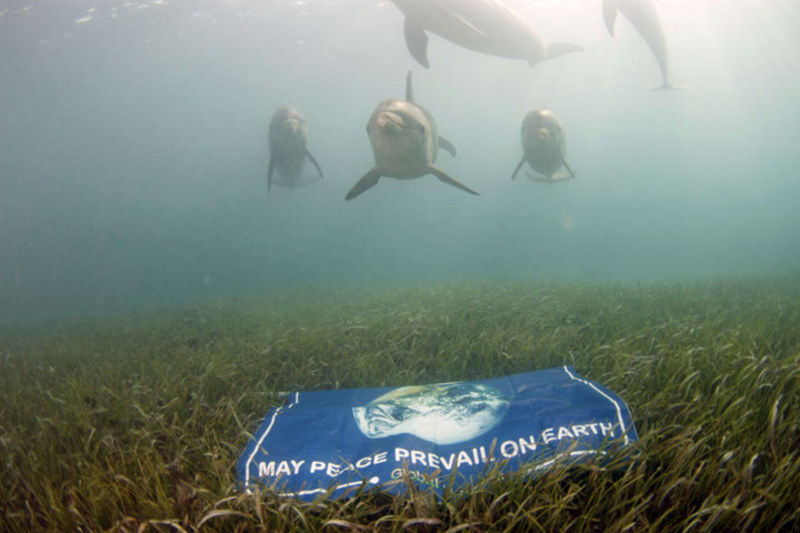
http://www.speakdolphin.com/images/archive/dolphingames/EarthFlag-1514-web.jpg
http://k43.pbase.com/o6/85/582185/1/78983755.E1liVAe0._MG_6216cap1.jpg
http://www.nies.ch/sky/stars/Milky_Way.jpg
They who bind to themselves a joy
Do the winged life destroy
They who kiss the joy as it flies
Live in eternity’s sunrise
(adapted from William Blake)

One in eight bird species faces extinction, warns Birdlife International in a new report and website released on September 22, 2008. (State of the World’s Birds, birdlife.org/sowb). This report found biodiversity "continues to get worse, and that, if anything, this deterioration is accelerating, not slowing." Threatened with extinction include 82 percent of albatross species, 60 percent of cranes, 27 percent of parrots, 23 percent of pheasants, and 20 percent of pigeons listed. In the 20 years since 1988 and 2008, 225 additional bird species have been listed in a higher category of threat.

It does indeed seem like we are binding to ourselves a joy, and thus destroying the bird life we treasure. In turn we cage ourselves into a world with diminishing beauty. Ecotherapist Howard Clinebell writes, “There is a general sadness and desperation that undercuts our lives as we witness the steady decline of biodiversity at our own hands, and if we wish happiness we must address the ages old injury our culture and beings have suffered.”
 I look into the future and feel the weight bearing down on me of the increasing barren landscapes once so luxurious around my subtropical home. It seems I have a choice though. Do I bend into the ground and bury what beauty and joy is in me or do I dance under any and every winged wonder that flies over, no matter its alarming conservation status? Weeping comes naturally enough, but it is not enough. For I know that no matter what the coming years bring, beauty once was, and even its memory keeps beauty before and around me, for it is in me. In you. In our species, though we are throwing away the greatest gifts in the world. The gift cannot be extinguished, though the way is dark. Somewhere in the deep reaches of our minds still flies the Carolina Parakeet screeching in the trees that exist here only by our species’ permission. When shall we give ourselves the permission to fly free, to live with abundance. What shall we do to liberate ourselves as we liberate the birds from extinction?
For me the answer lies partly in this poem by Wendell Berry in his most recent book on poems, Given:
 The yellow-throated warbler, the highest remotest voice of this place, sings in the tops of the tallest sycamores, but one day he came twice to the railing of my porch where I sat at work above the river. He was too close to see with binoculars. Only the naked eye could take him in, a bird more beautiful that every picture of himself, more beautiful than himself killed and preserved by the most skilled taxidermist, more beautiful than any human mind, so small and inexact, could hope ever to remember. My mind became beautiful by the sight of him. He had the beauty only of himself alive in the only moment of his life. He had upon him like a light the whole beauty of the living world that never dies.
I pray that we may not be left alone with only memories.

.jpg)